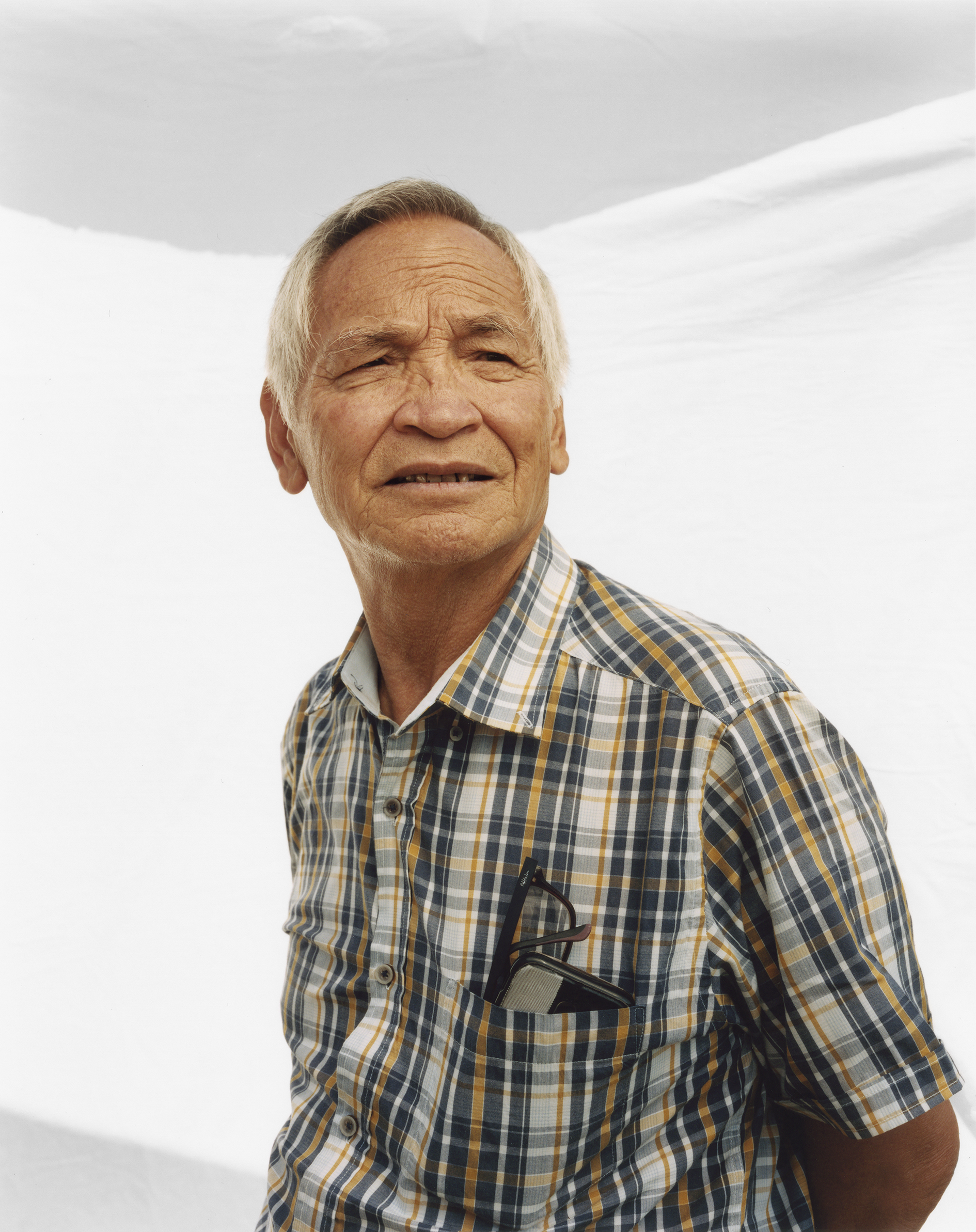
Pierre-Marie Beryl was born in Vietnam in 1944. His aunt tore him away from his mother and entrusted him to the French sisters of the "Domaine de Marie" in the south of the country. His birth certificate reads: "French nationality, not to be doubted. Born French." He arrived barefoot in Marseille in November 1955. Taken in by the FOEFI (Federation of French Childhood Works in Indochina), he was sent to Vouvray. Upon retirement, he hears about Noyant-d'Allier. Captivated by the architecture of the mining villages and the Vietnamese community, he moved there in 2009.
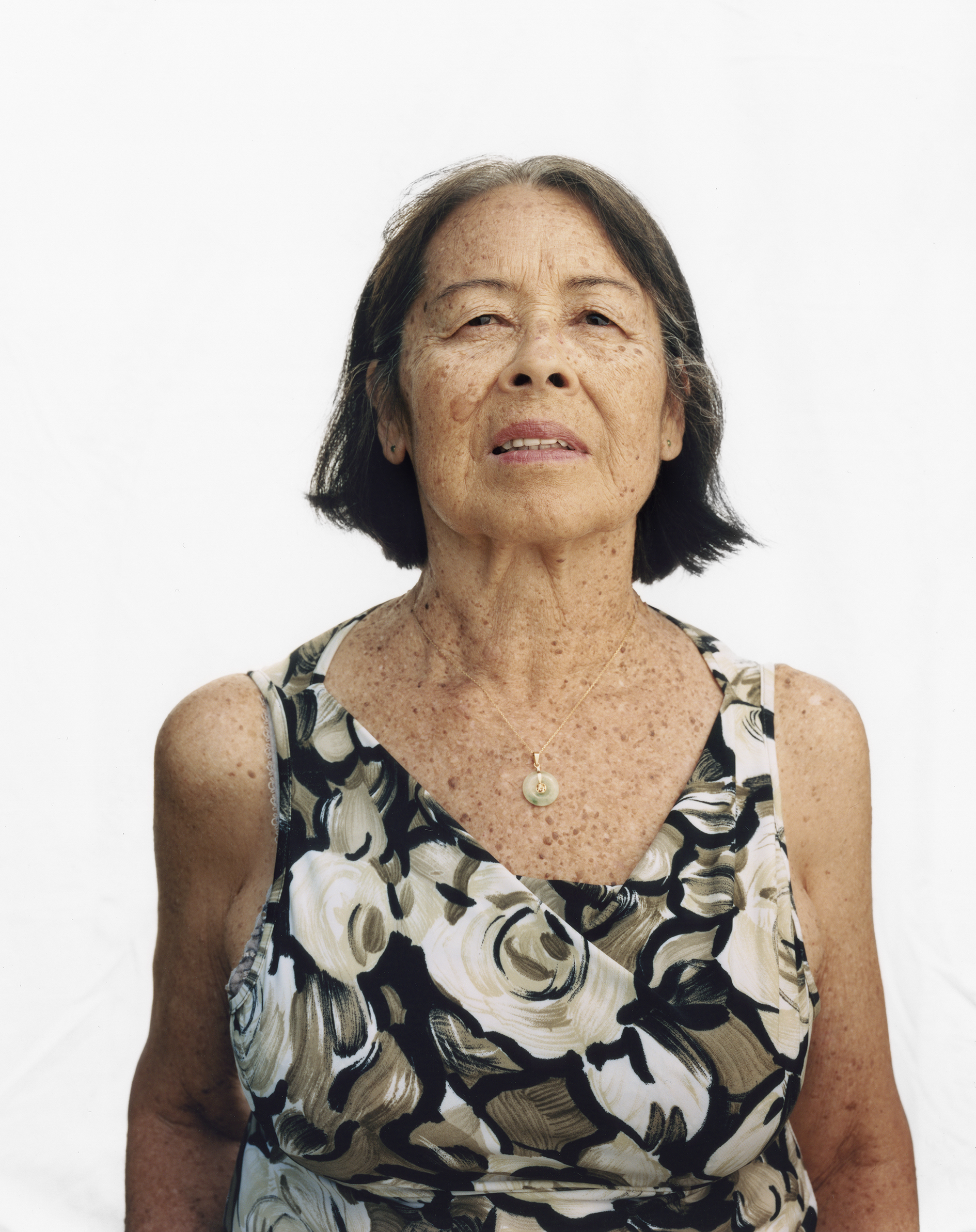
Caroline Mitre, née française au Vietnam en 1959 de parents eurasiens employés par l'armée. En France, ses parents travaillent à Paris et la placent en pension près de Vichy. Elle s'estime chanceuse face aux enfants restés à Noyant-d'Allier.
Caroline Mitre, born French in Vietnam in 1959. Her Eurasian parents worked for the French army. Upon arriving in France in the 1960s, both had to work in Paris. The children were placed in a boarding school near Vichy. Caroline has fond memories of this period and feels lucky compared to the other Indochinese children who stayed in Noyant-d’Allier, whom she met during school holidays.
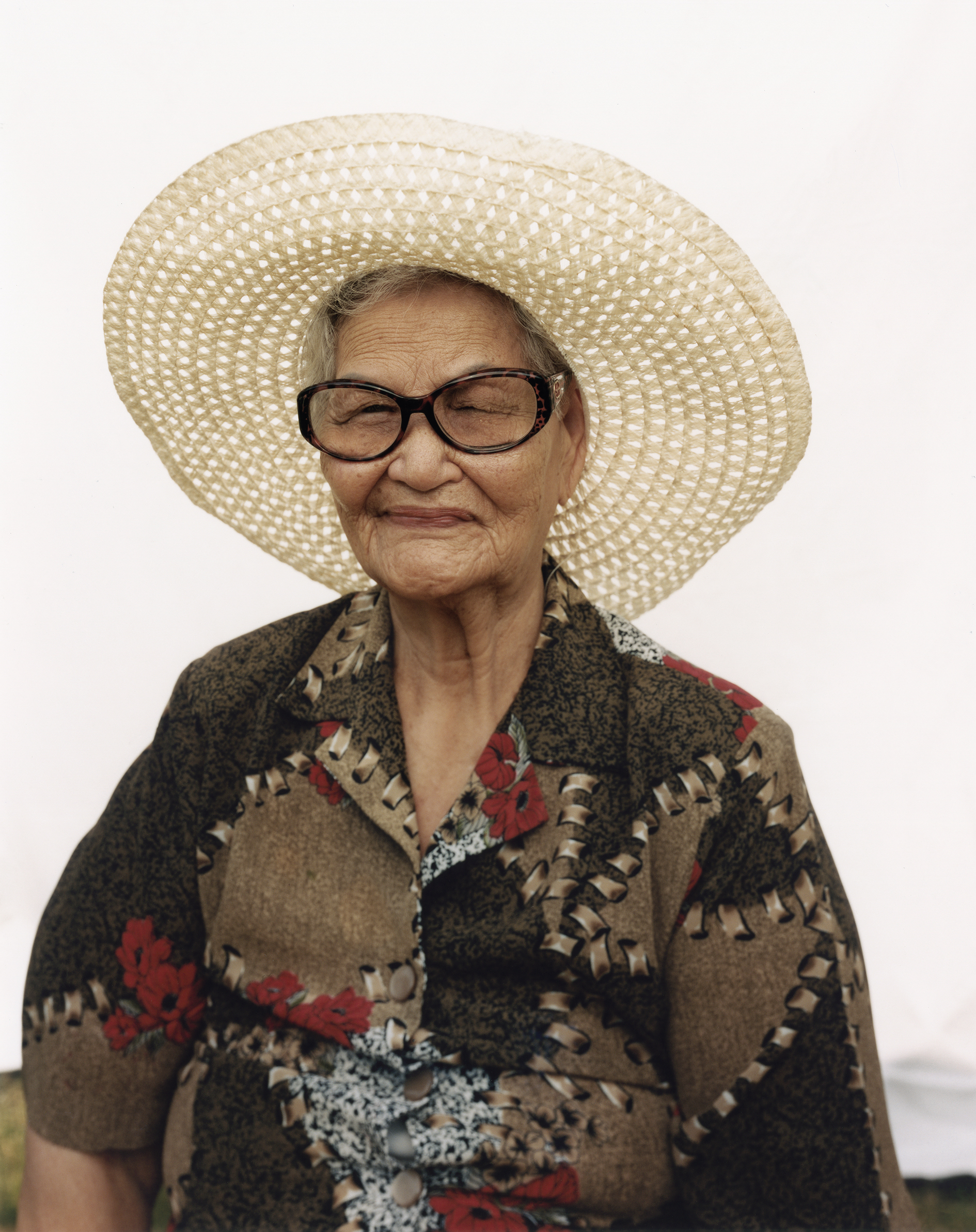
Khoune Nang Hoareau, née au Laos en 1926. À Hué, elle rencontre son mari réunionnais. La famille arrive en France en 1963 et s'installe à Noyant-d'Allier, où naissent cinq autres enfants.
Khoune Nang Hoareau was born in Laos in 1926. It was in Hue, in central Vietnam, that she met her husband from Réunion. They arrived in France in 1963 with their ten children. Settling in Noyant-d'Allier, the family would grow with the addition of five more children.

Liserons d'eau fraîchement coupés. Les premières grands-mères du camp de Sainte-Livrade-sur-Lot ont confié leurs graines rapportées du Vietnam au paysan voisin. Son exploitation ne produit plus que des légumes et herbes asiatiques.
Freshly cut morning glory. The first grandmothers who arrived at the Sainte-Livrade-sur-Lot camp gave their precious seeds, brought from Vietnam, to the neighboring farmer. Today, the farm produces only Asian vegetables and herbs.
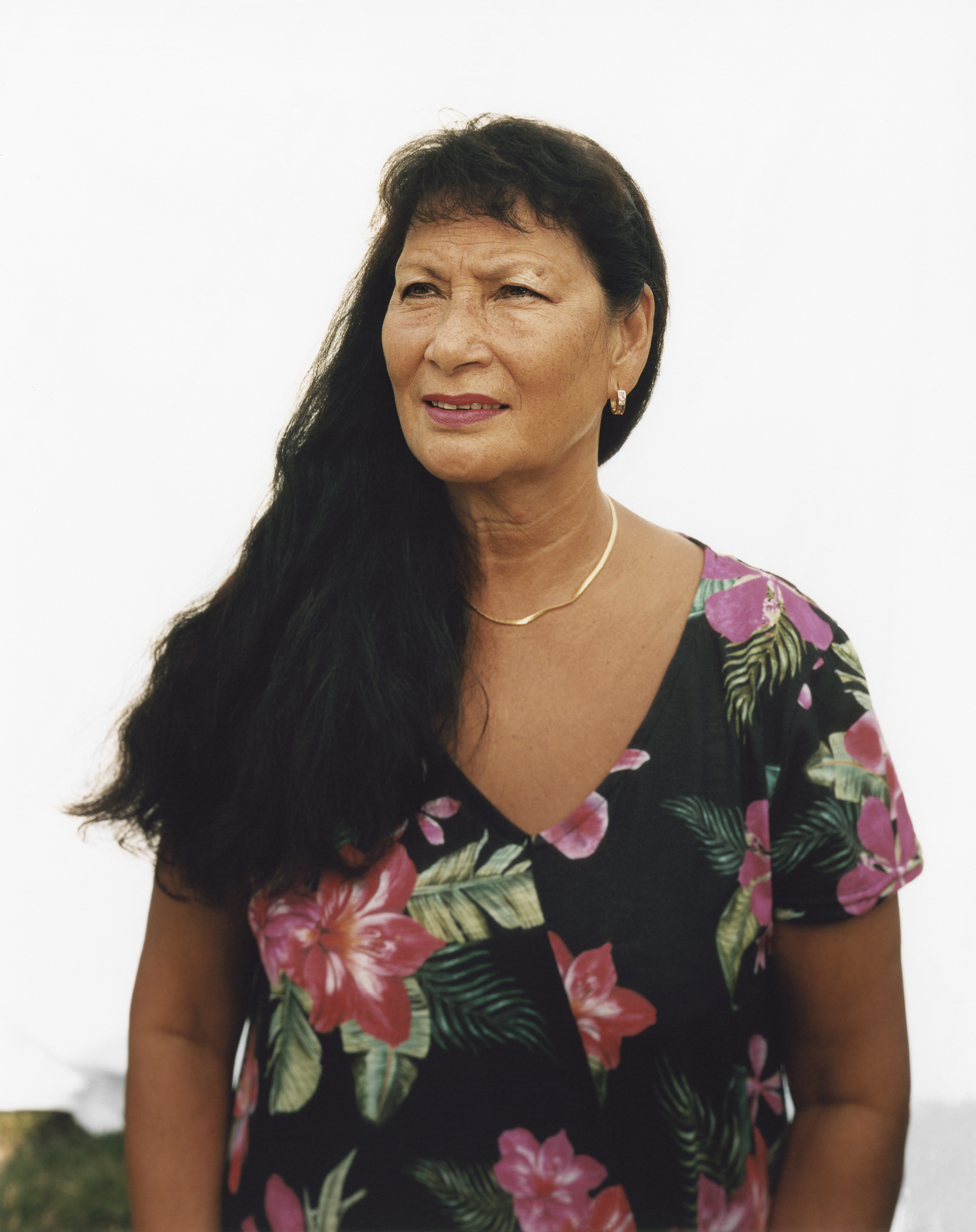
Juliette Hoareau, daughter of Khoune Nang Hoareau, was born in Vietnam in 1951 and arrived in France in 1963.

Pagode de Noyant-d'Allier, construite en 1983.
Noyant-d'Allier Pagoda, built in 1983.

Jérémy Fouqué, 32 ans, né en France d'un père vietnamien et d'une mère française. Son tatouage associe une tête de dragon au plan du CAFI de Sainte-Livrade-sur-Lot et à son château d'eau.
Jérémy Fouqué, 32 years old. Born in France to a Vietnamese father and a French mother. His tattoo represents a dragon's head, with the layout of the CAFI (Reception Center for the French of Indochina) in Sainte-Livrade-sur-Lot and its iconic water tower.
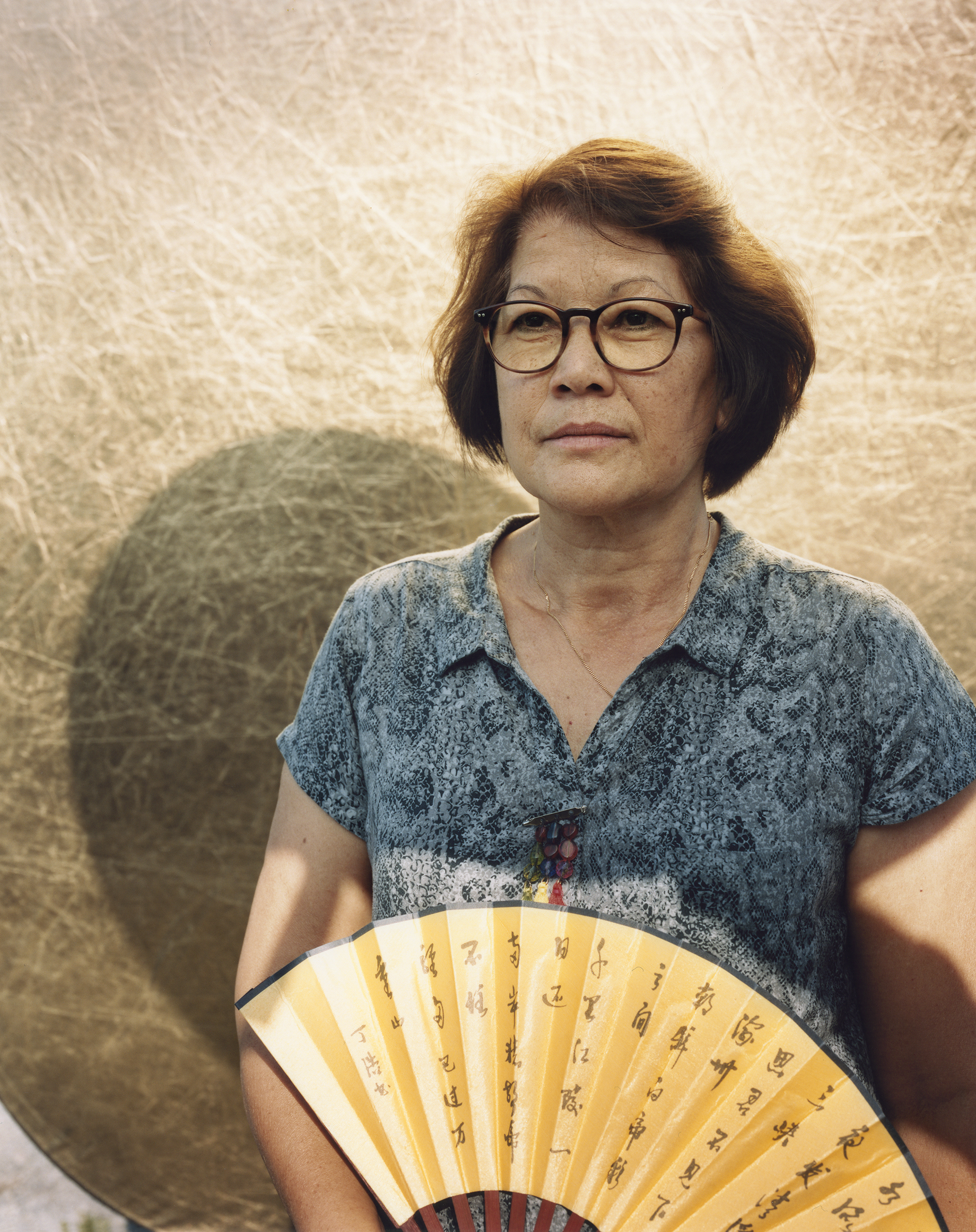
Édith Simon, née au Vietnam en 1952 d'un père du Corps expéditionnaire français et d'une mère vietnamienne. Arrivée en France en 1955, elle grandit dans le Morvan, entre la maison vietnamienne et celle de sa « mamie » française, de l'autre côté de la route. Quand son père est mobilisé pour l'Algérie, elle rejoint avec sa mère la communauté vietnamienne de Noyant-d'Allier.
Édith Simon was born in Vietnam in 1952 to a French father from the Expeditionary Corps and a Vietnamese mother. She arrived in France in 1955, and the family settled in the Morvan, the father's village of adoption. Édith navigated between two ways of life: Vietnamese at home and French at her "grandmother's" house, across the road. When her father was mobilized for Algeria, she reunited with her mother and the Vietnamese community settled in Noyant-d'Allier.

Devant la pagode du CAFI (Centre d'accueil des Français d'Indochine), à Sainte-Livrade-sur-Lot.
In front of the pagoda of the CAFI (Reception Center for the French of Indochina) in Sainte-Livrade-sur-Lot.
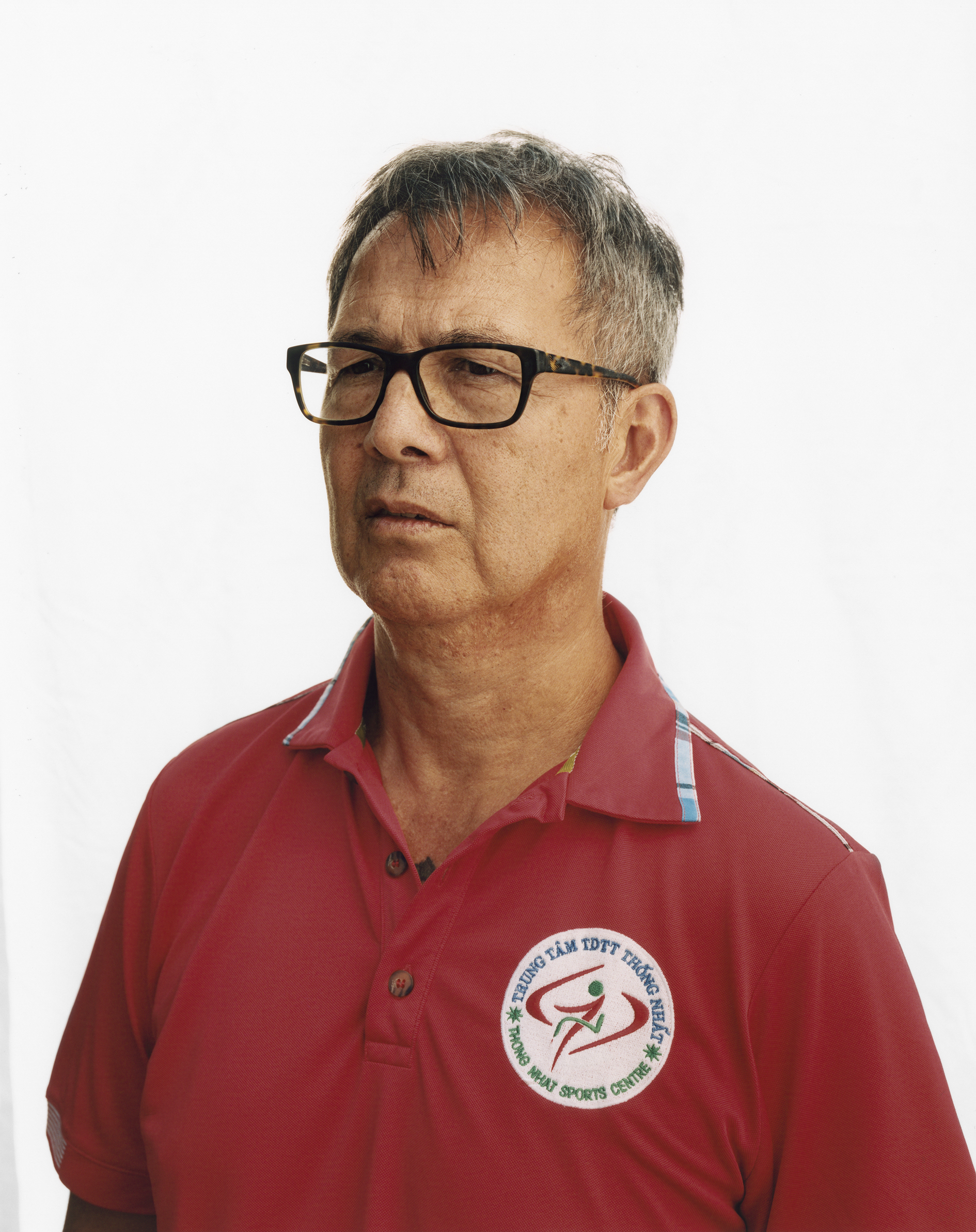
Julien Cao Van Tuat, né au Vietnam en 1958 d'une mère vietnamienne et d'un père devenu français à vingt ans par « jugement d'apparence ». La famille de neuf enfants arrive en France en 1959 : un an dans un camp militaire près de Poitiers, puis, en octobre 1962, à l'arrivée des premiers pieds-noirs, les corons de Noyant-d'Allier.
Julien Cao Van Tuat was born in Vietnam in 1958, to a Vietnamese mother and a father who, at the age of twenty, received French nationality through a "judgment based on appearance." The family of nine children arrived in France in 1959. For about a year, they lived in a military camp near Poitiers. In October 1962, with the arrival of the first pieds-noirs, they were relocated to Noyant-d'Allier.
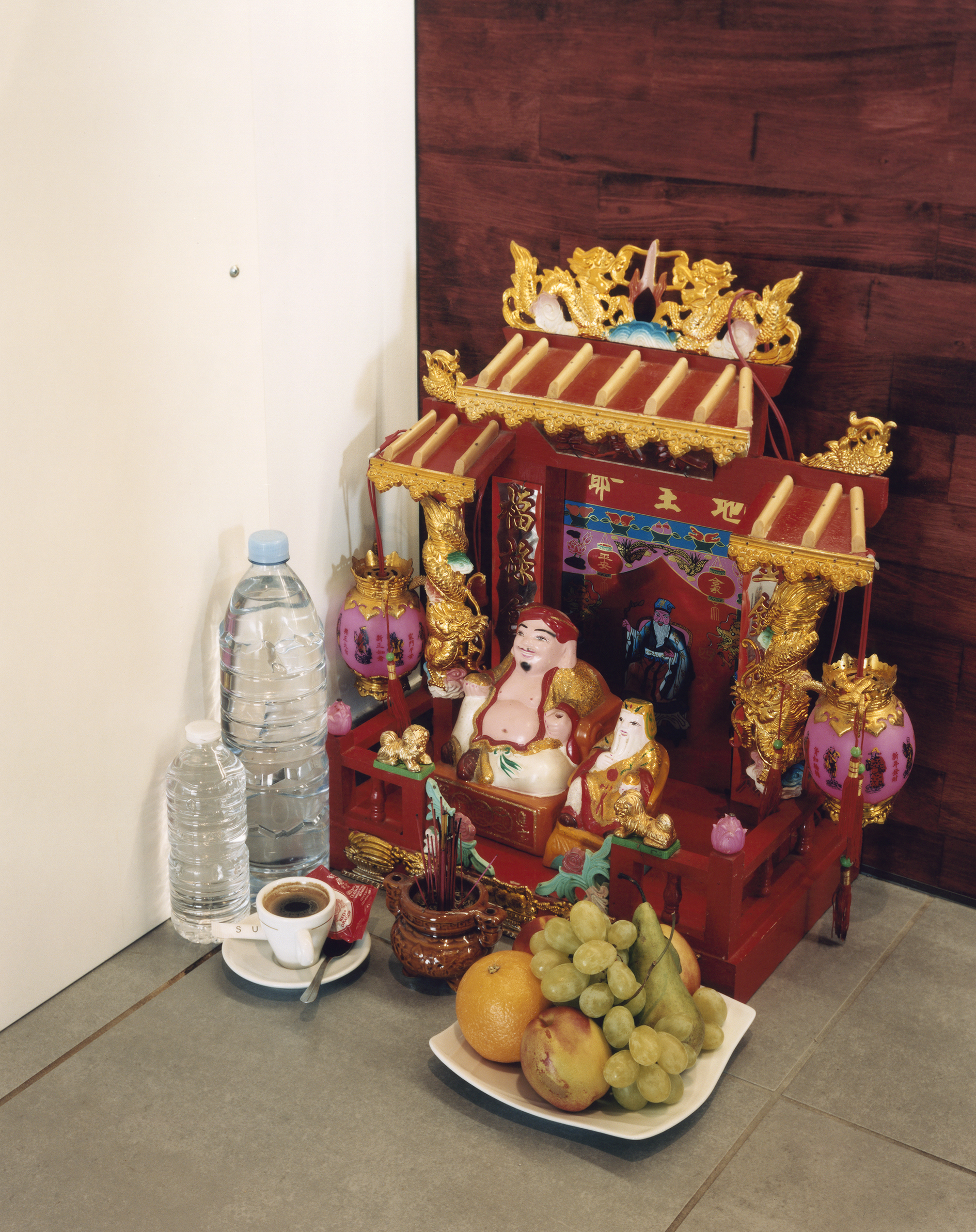
Restaurant Le Petit d'Asie in Noyant-d'Allier.
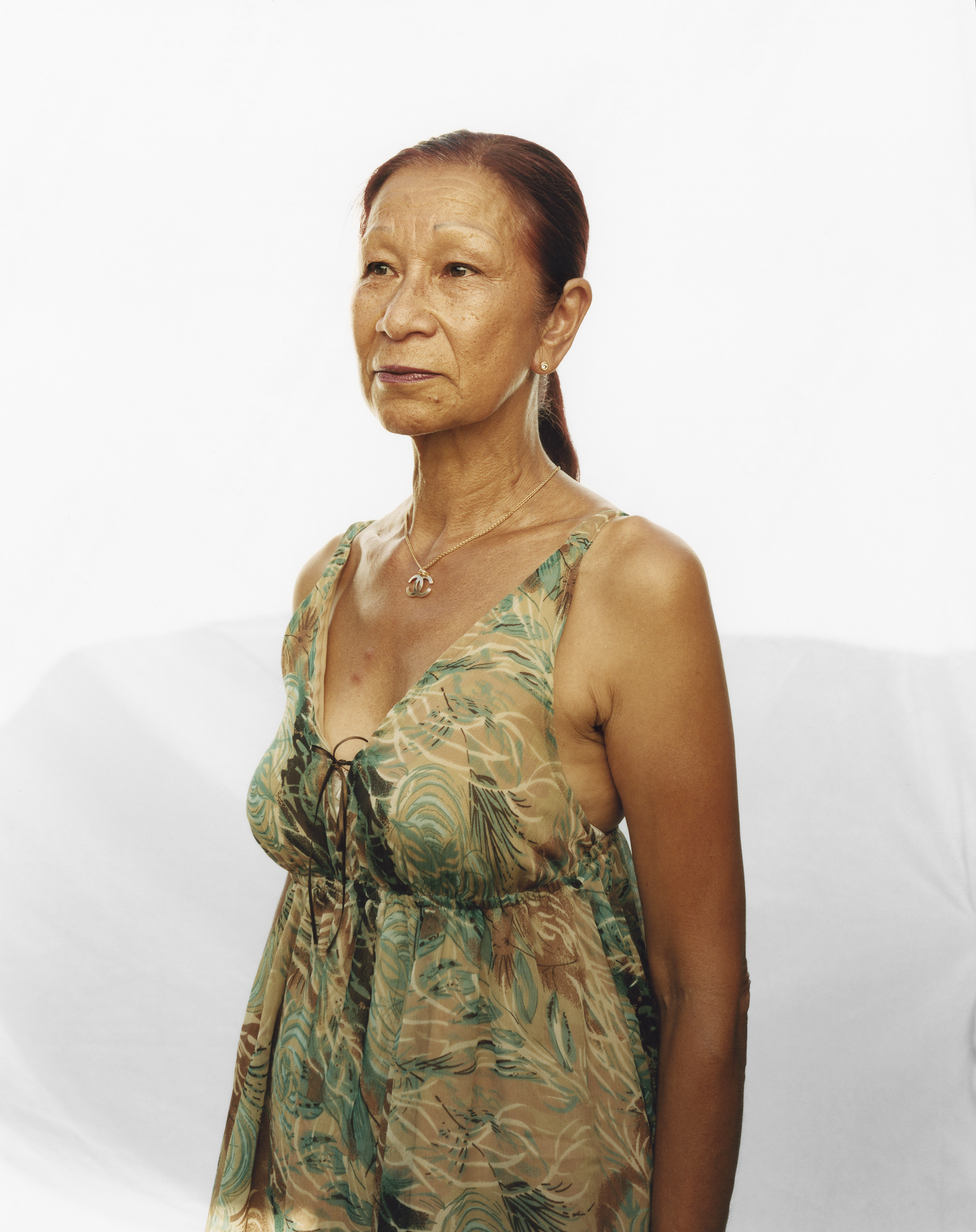
Le 15 août, pendant la Fête de la Mémoire, rassemblement national des descendants de rapatriés d'Indochine.
On August 15th, during the Fête de la Mémoire, a national gathering of the descendants of repatriates from Indochina.

Tête de lion rapportée du Vietnam par les premiers rapatriés d'Indochine, arrivés en France en 1956.
Lion's head brought back from Vietnam by the first repatriates from Indochina who arrived in France in 1956.
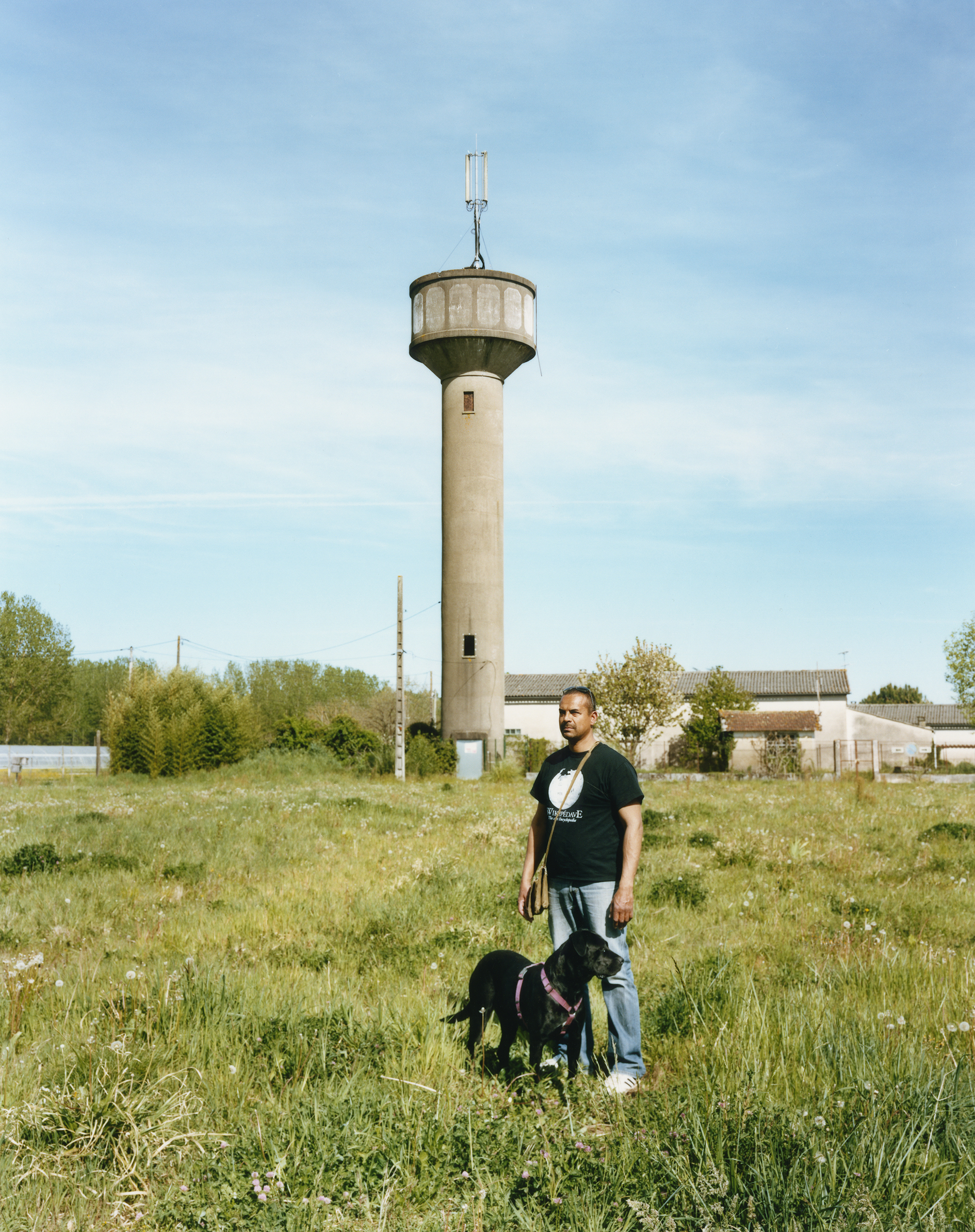 David Harasymczuk, né au CAFI en 1970 d'une mère eurasienne et d'un père d'origine polono-ukrainienne, à l'endroit du camp où sa grand-mère laotienne l'a élevé.
David Harasymczuk was born at the CAFI (Reception Center for the French of Indochina) in 1970, to an Eurasian mother and a father of Polish/Ukrainian origin. He is photographed at the location of the camp where his Laotian grandmother raised him.
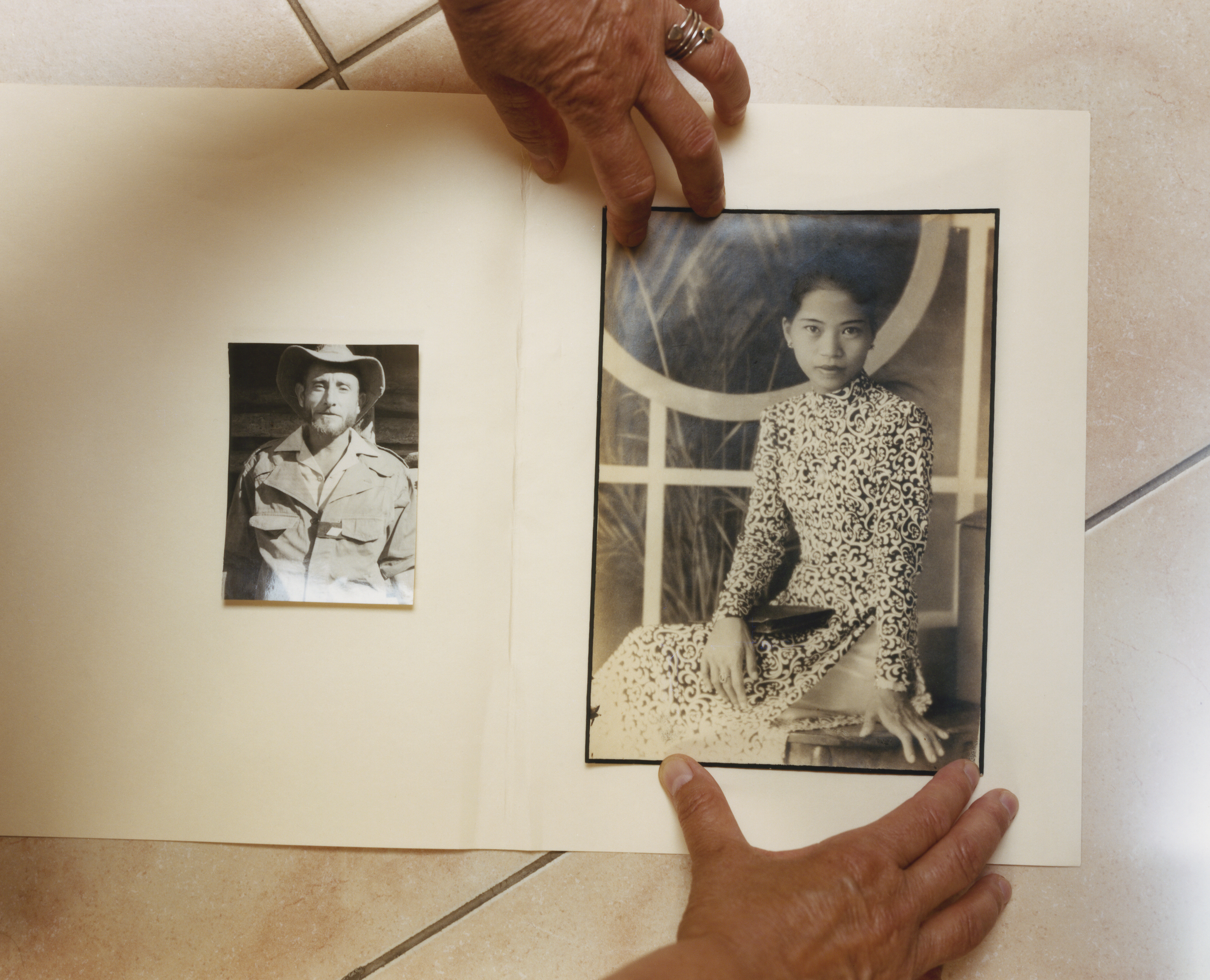 Édith Simon tient le portrait de ses parents.
Édith Simon holding the portrait of her parents.
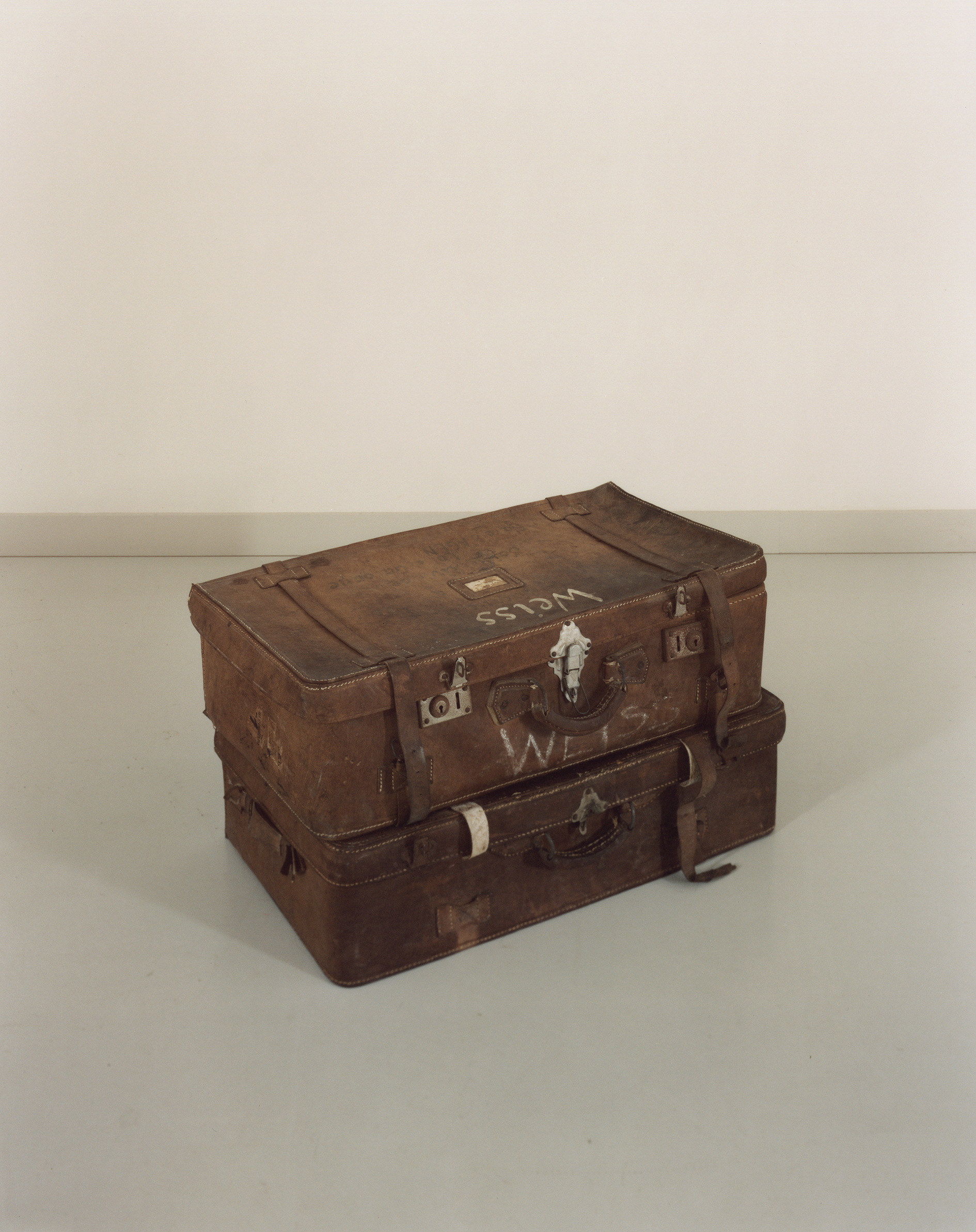
Valise de la famille Weiss, utilisée lors de son rapatriement d'Indochine. Lieu de mémoire du CAFI, Sainte-Livrade-sur-Lot.
In the Memory Site of the CAFI (Reception Center for the French of Indochina), a suitcase used by the Weiss family during their repatriation from Indochina.
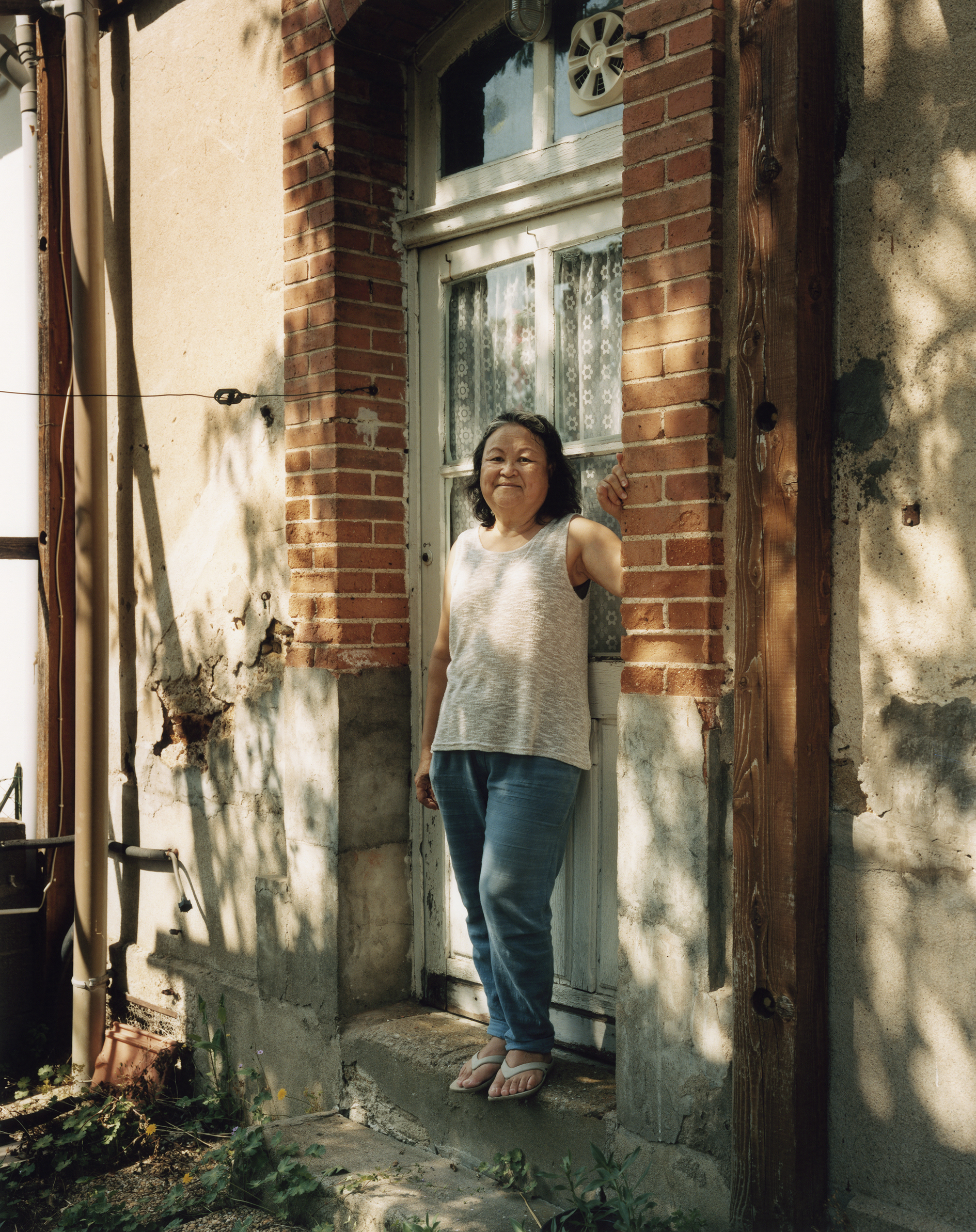 Jacqueline Maggiol, née au Vietnam en 1956 d'un père métis et d'une mère vietnamienne. Ses parents hésitent à partir ; en 1965, quand les États-Unis entrent en guerre, la famille embarque sur l'un des derniers bateaux de rapatriement. La communauté vietnamienne déjà installée à Noyant-d'Allier facilite son arrivée. Jacqueline devant la maison de son enfance.
Jacqueline Maggiol was born in Vietnam in 1956, to a mixed-race father and a Vietnamese mother. Her parents hesitated to leave Vietnam. In 1965, with the entry of the United States into the war, they finally boarded the last repatriation boats bound for France. The Vietnamese community in Noyant-d'Allier, already well-established, facilitated their arrival. Jacqueline in front of her childhood home.
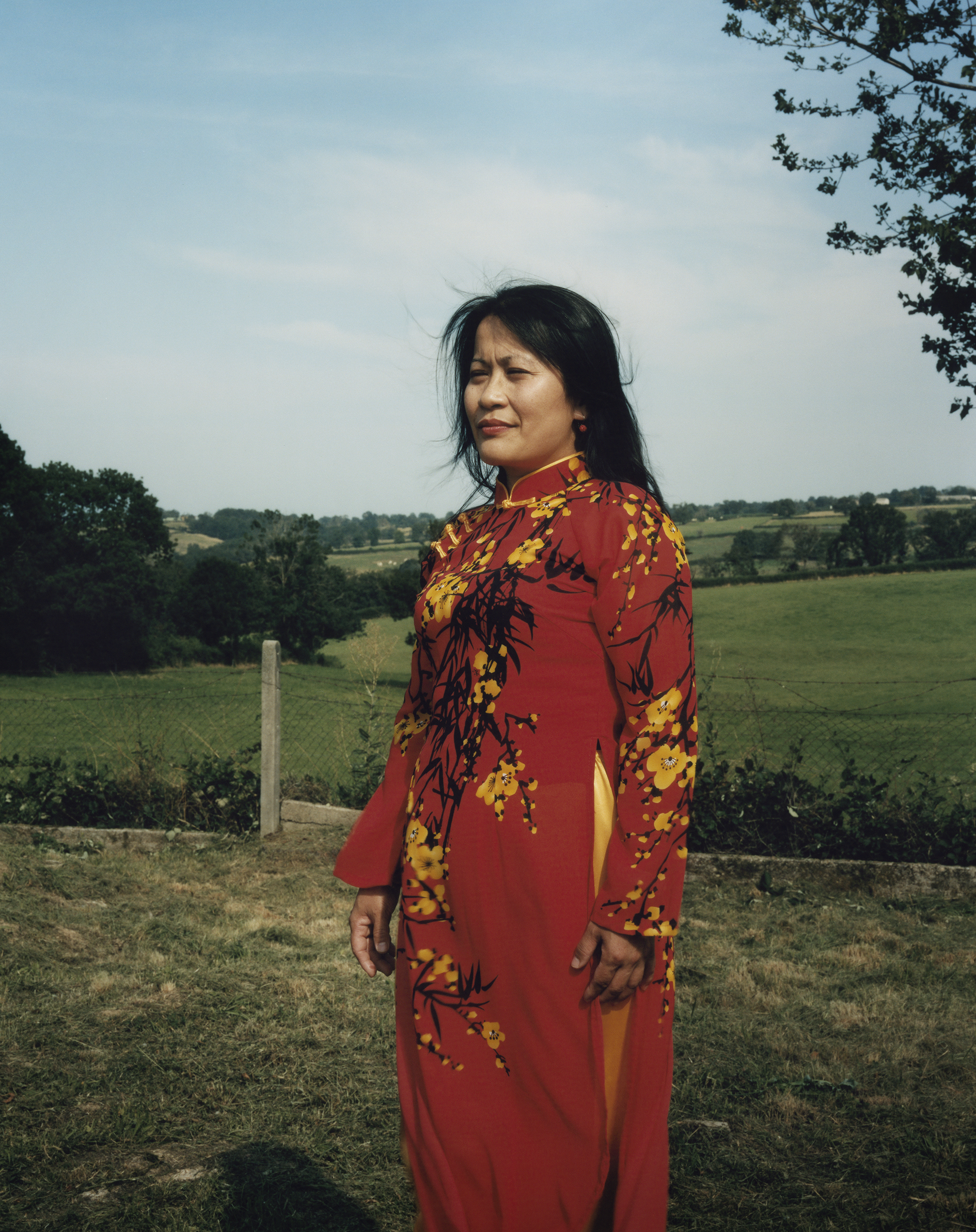 Nguyen Thi Phuoc Trong, née au Vietnam en 1980, devenue Caroline Guyenne. Sa famille a fui le Vietnam après la chute de Saïgon et s'installe à Noyant-d'Allier en 1991, rejoignant la communauté arrivée en 1956. Elle n'est pas rapatriée : elle est réfugiée.
Nguyen Thi Phuoc Trong, born in Vietnam in 1980, became Caroline Guyenne. Her family fled Vietnam after the fall of Saigon and settled in Noyant-d'Allier in 1991, joining the community that had arrived in 1956. She is not a repatriate but a refugee.
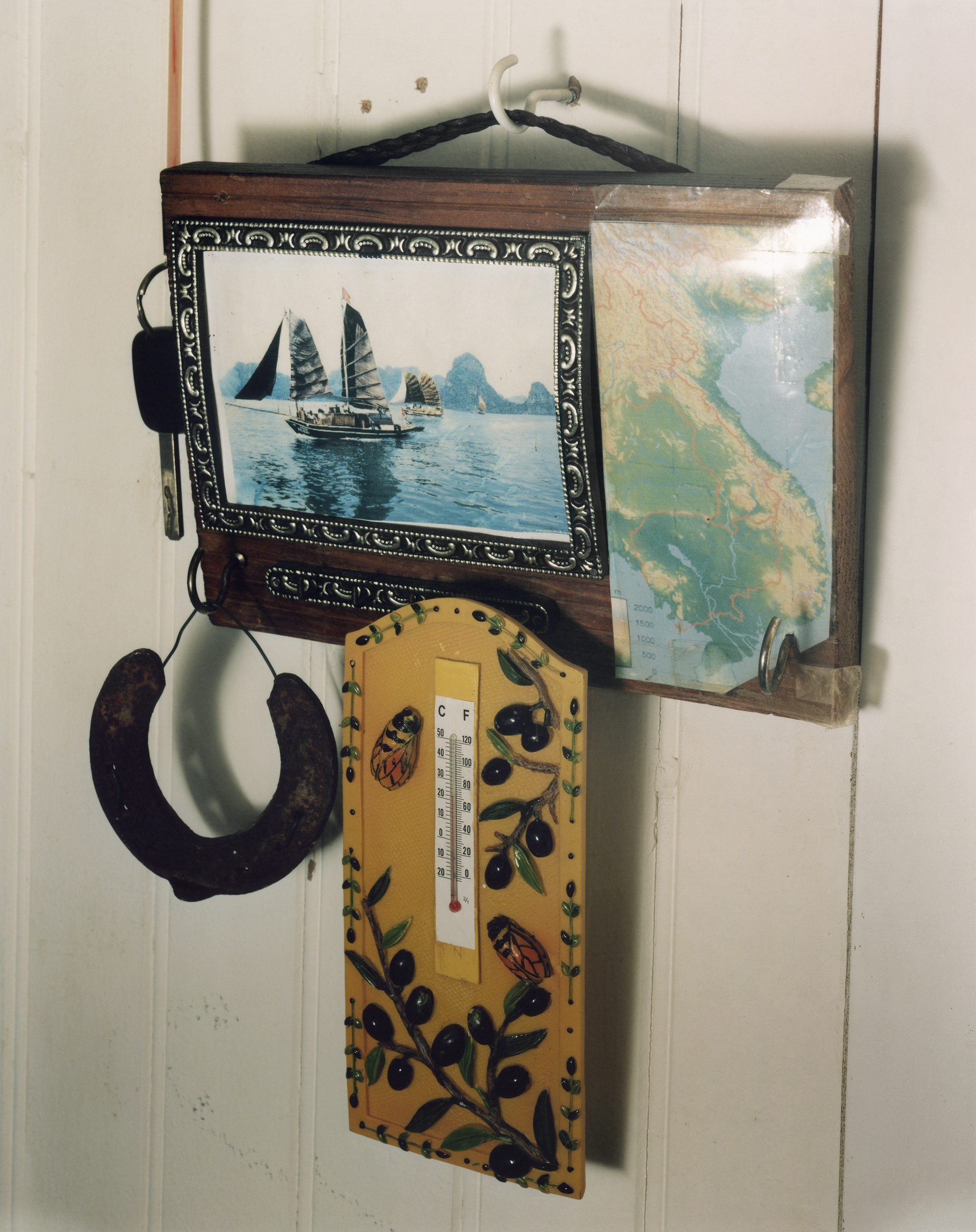 Intérieur d'un coron, à Noyant-d'Allier.
Inside a mining house (coron), in Noyant-d'Allier.
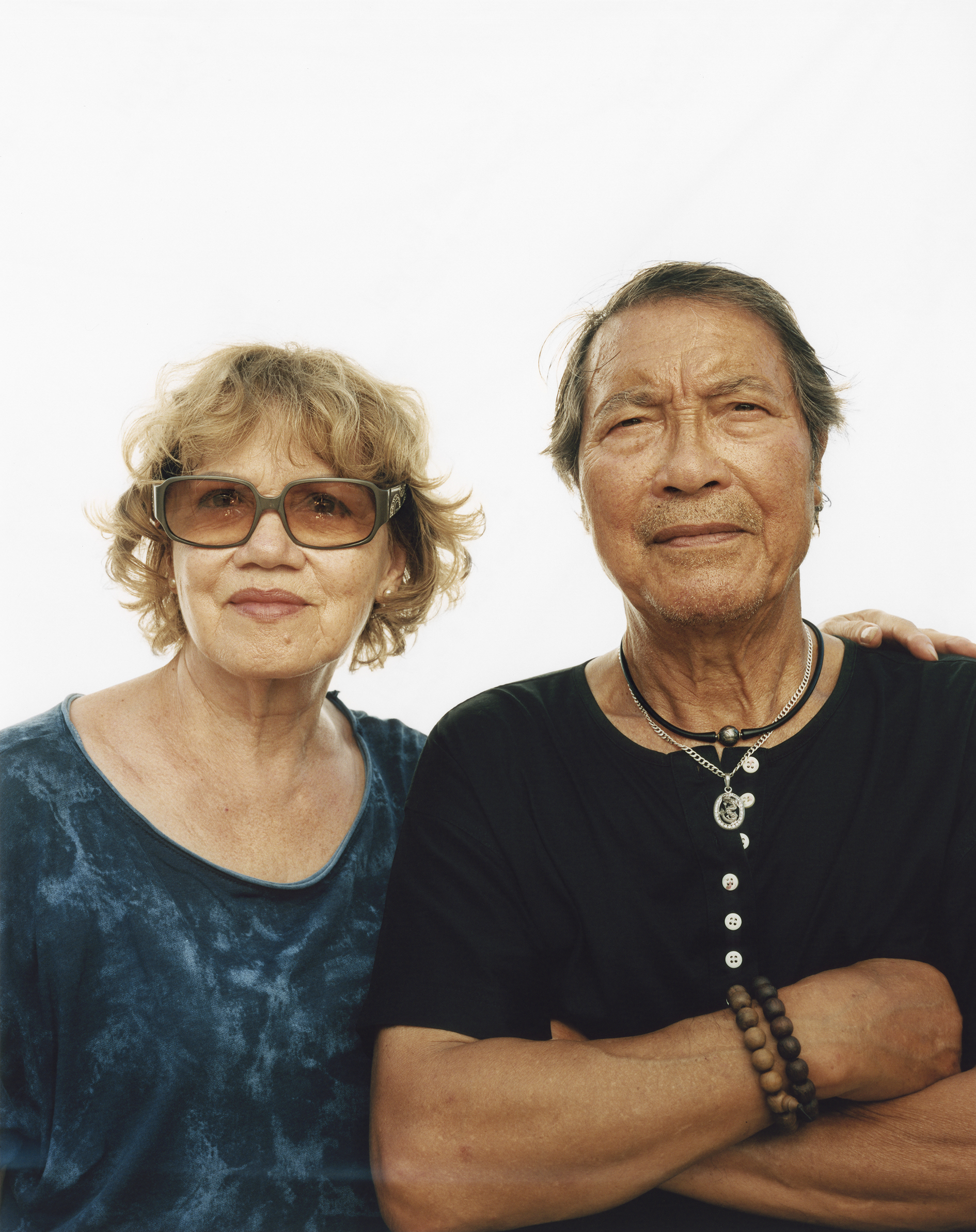 Jacques Genin, né au Vietnam en 1945, rapatrié en 1956 comme enfant de troupe, et sa femme, eurasienne elle aussi, à la Fête de la Mémoire du 15 août au CAFI de Sainte-Livrade-sur-Lot.
Jacques Genin was born in Vietnam in 1945. He was repatriated in 1956 as an enfant de troupe (a child raised in a military school). With his wife, who is also Eurasian, they participate in the Fête de la Mémoire on August 15th at the CAFI (Reception Center for the French of Indochina).
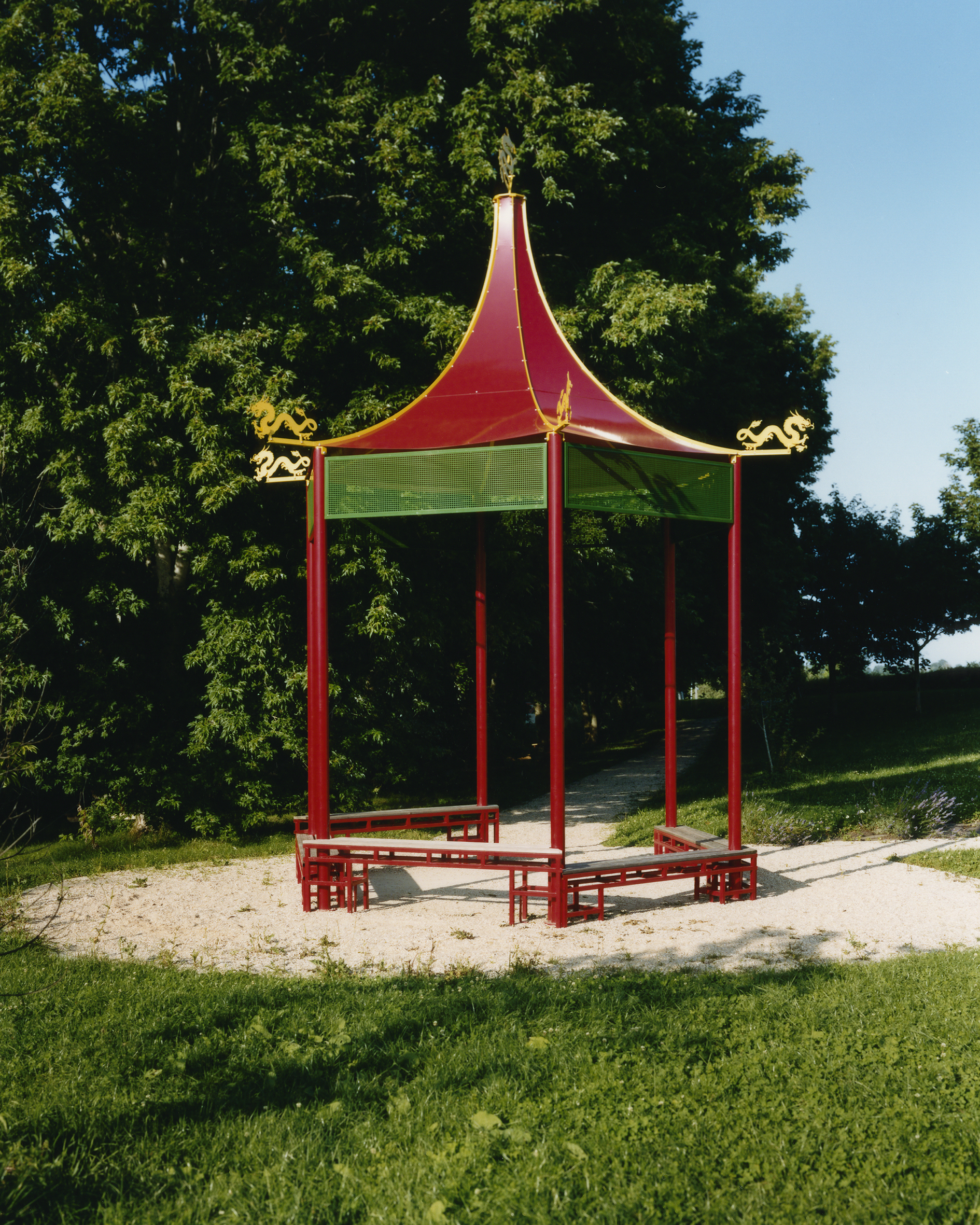 Le parc du Dragon, jardin asiatique de Noyant-d'Allier.
Dragon Park, the Asian garden of Noyant-d'Allier.
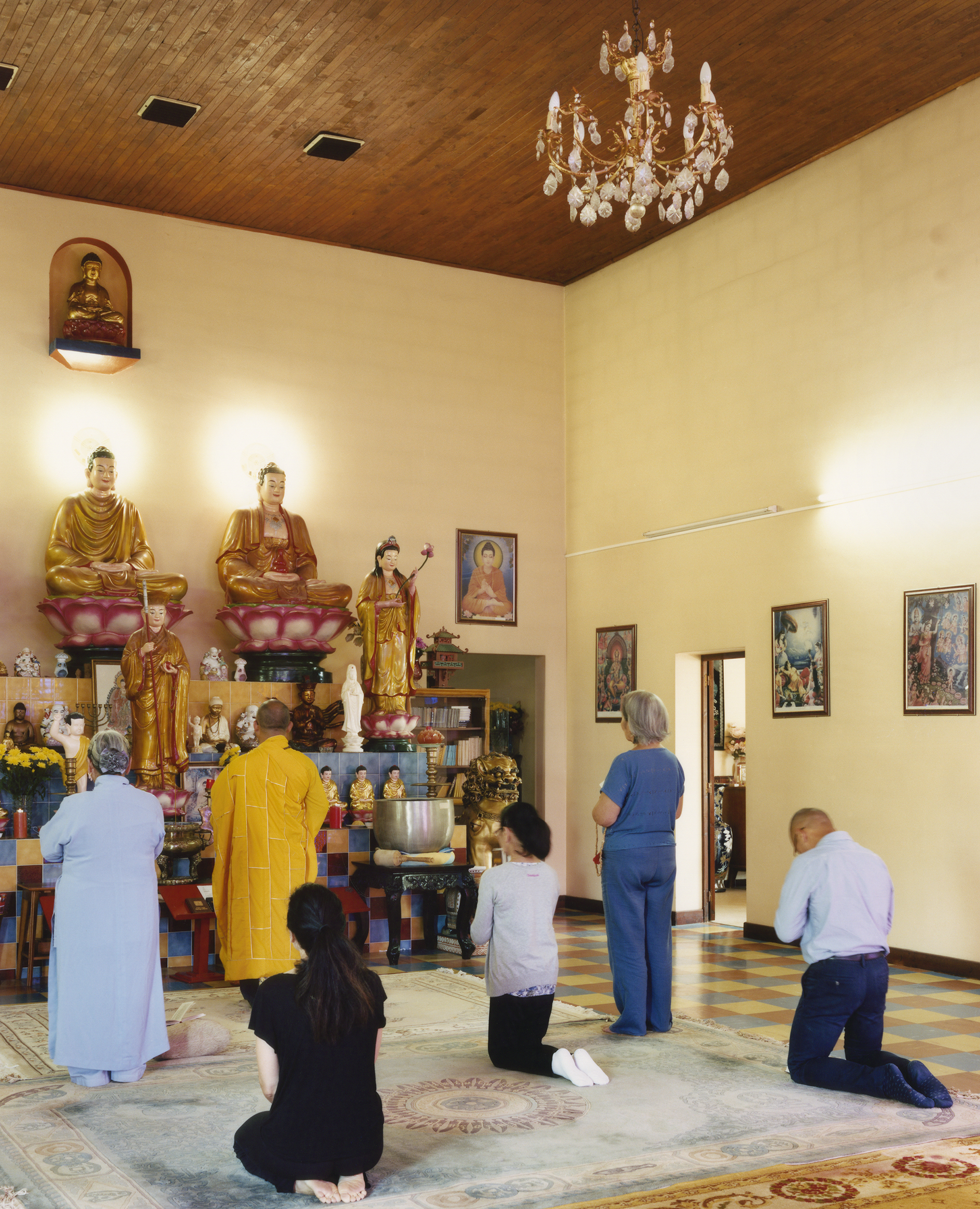 Pagode de Villeneuve-sur-Lot, financée en majorité par les dons des « grands-mères » rapatriées au CAFI de Sainte-Livrade-sur-Lot.
Villeneuve-sur-Lot Pagoda, mostly funded by donations from the "grandmothers" repatriated to the CAFI (Reception Center for the French of Indochina) in Sainte-Livrade-sur-Lot.
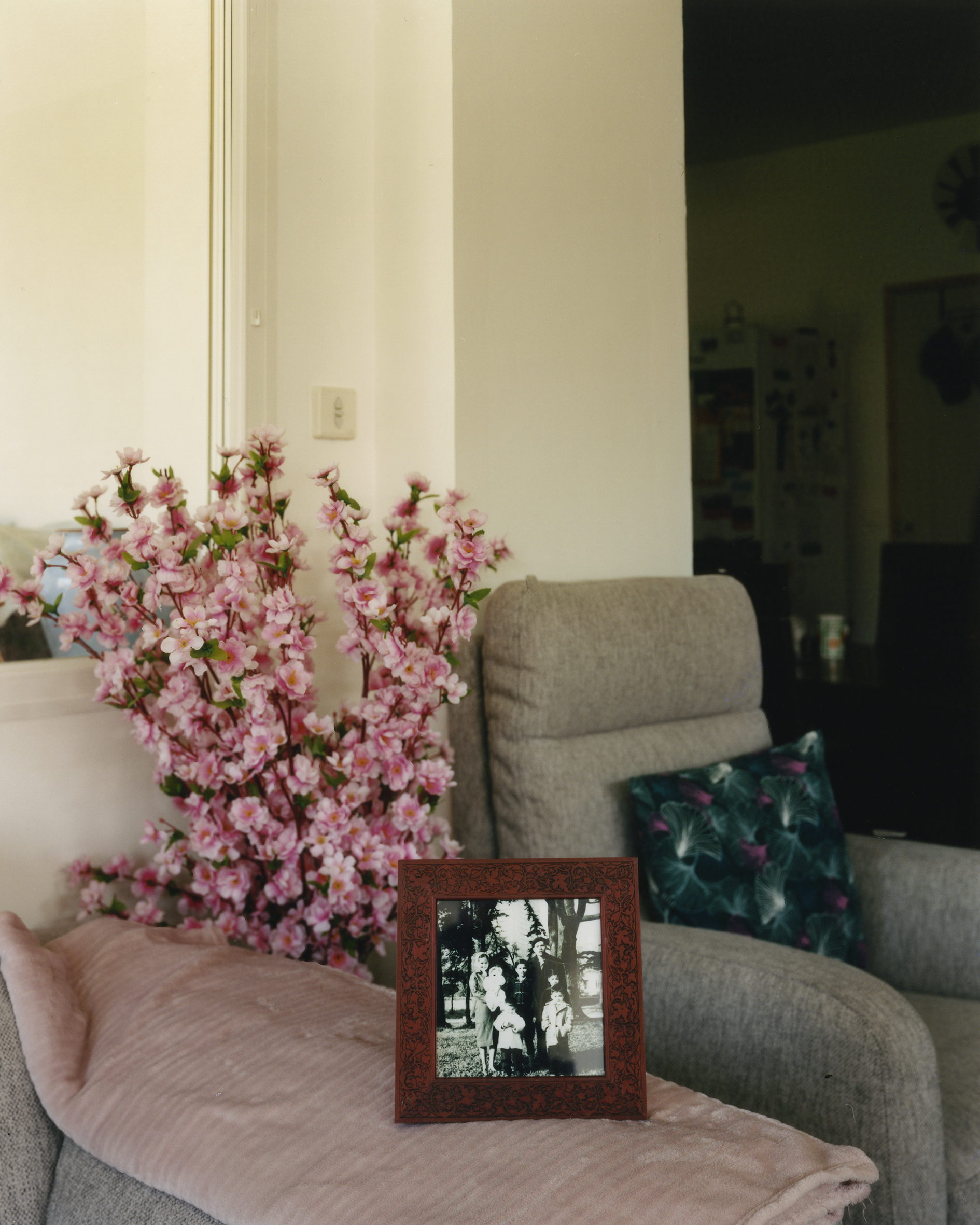 Intérieur d'un coron à Noyant-d'Allier. Sur la photographie de 1959, Julien Cao Van Tuat et sa famille à leur arrivée à Marseille.
The interior of a mining house, in Noyant-d'Allier. In the photo from 1959, Julien Cao Van Tuat and his family upon their arrival in Marseille.
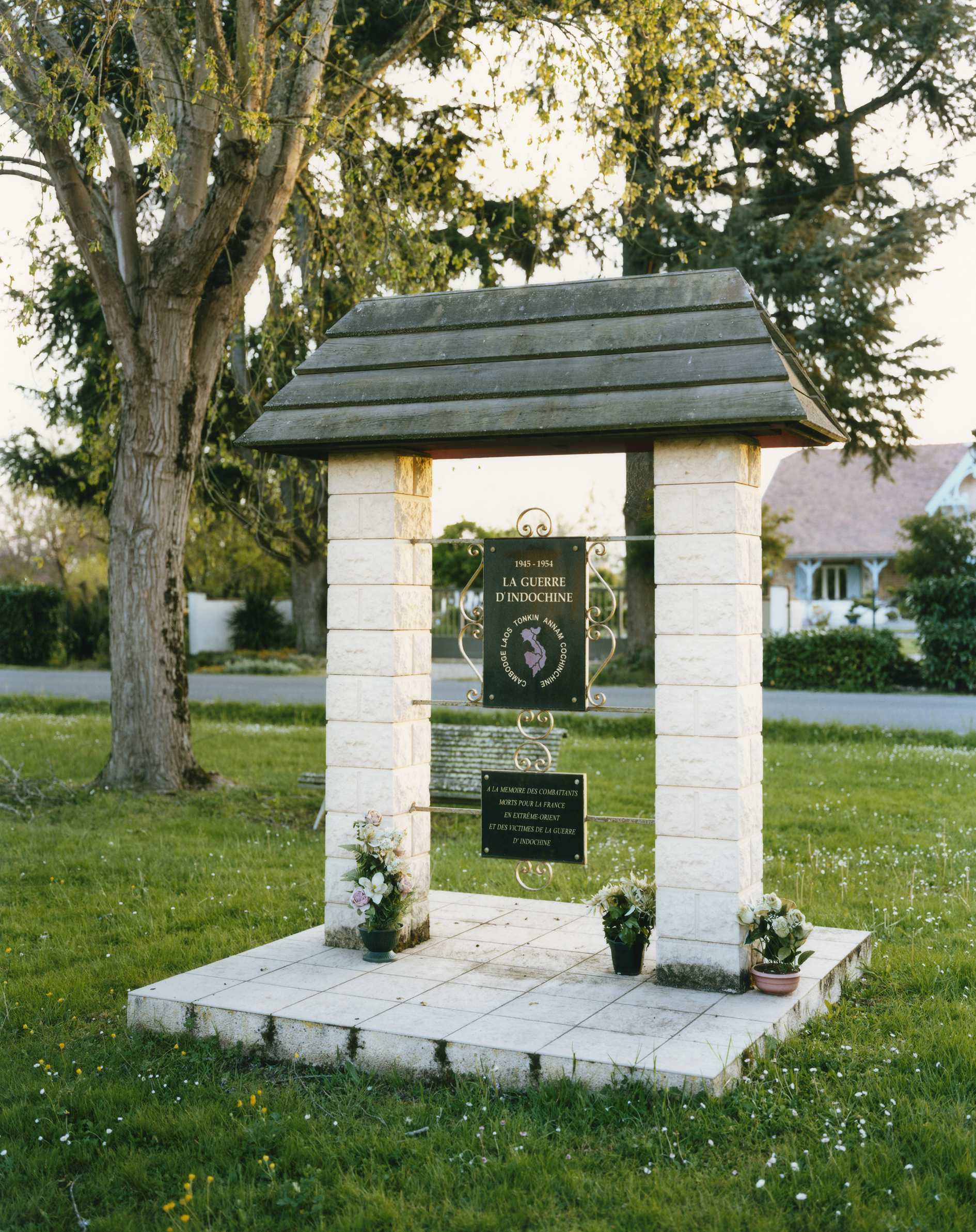
Monument dédié aux combattants de la guerre d'Indochine, au CAFI de Sainte-Livrade-sur-Lot.
Memorial dedicated to the fighters of the Indochina War. CAFI (Reception Center for the French of Indochina) in Sainte-Livrade-sur-Lot.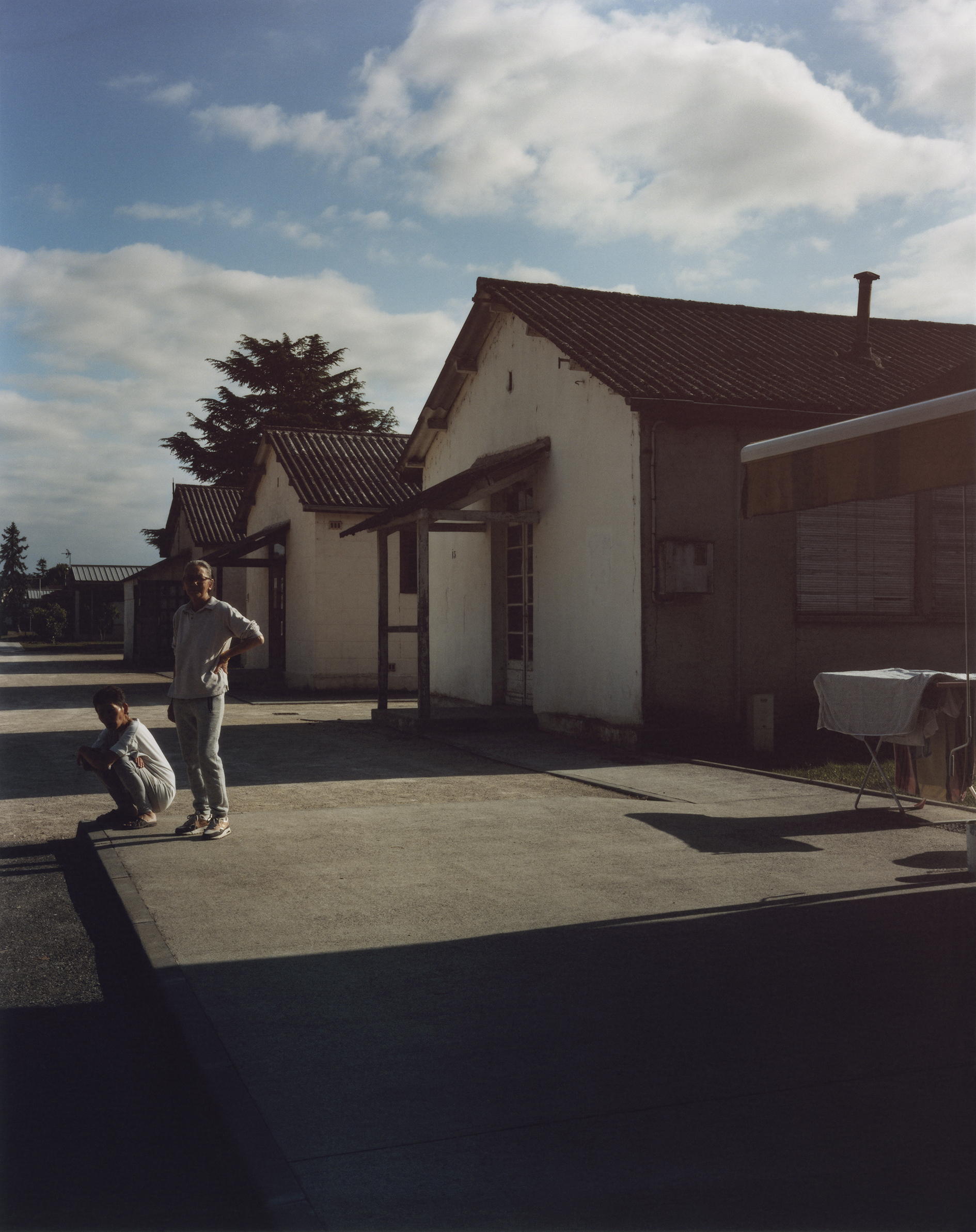 Claudine et Monique, deux des sœurs Caze, devant les quatre derniers bâtiments d'origine du camp.
Two of the Caze family's sisters, Claudine and Monique, in front of the last four original buildings of the camp.
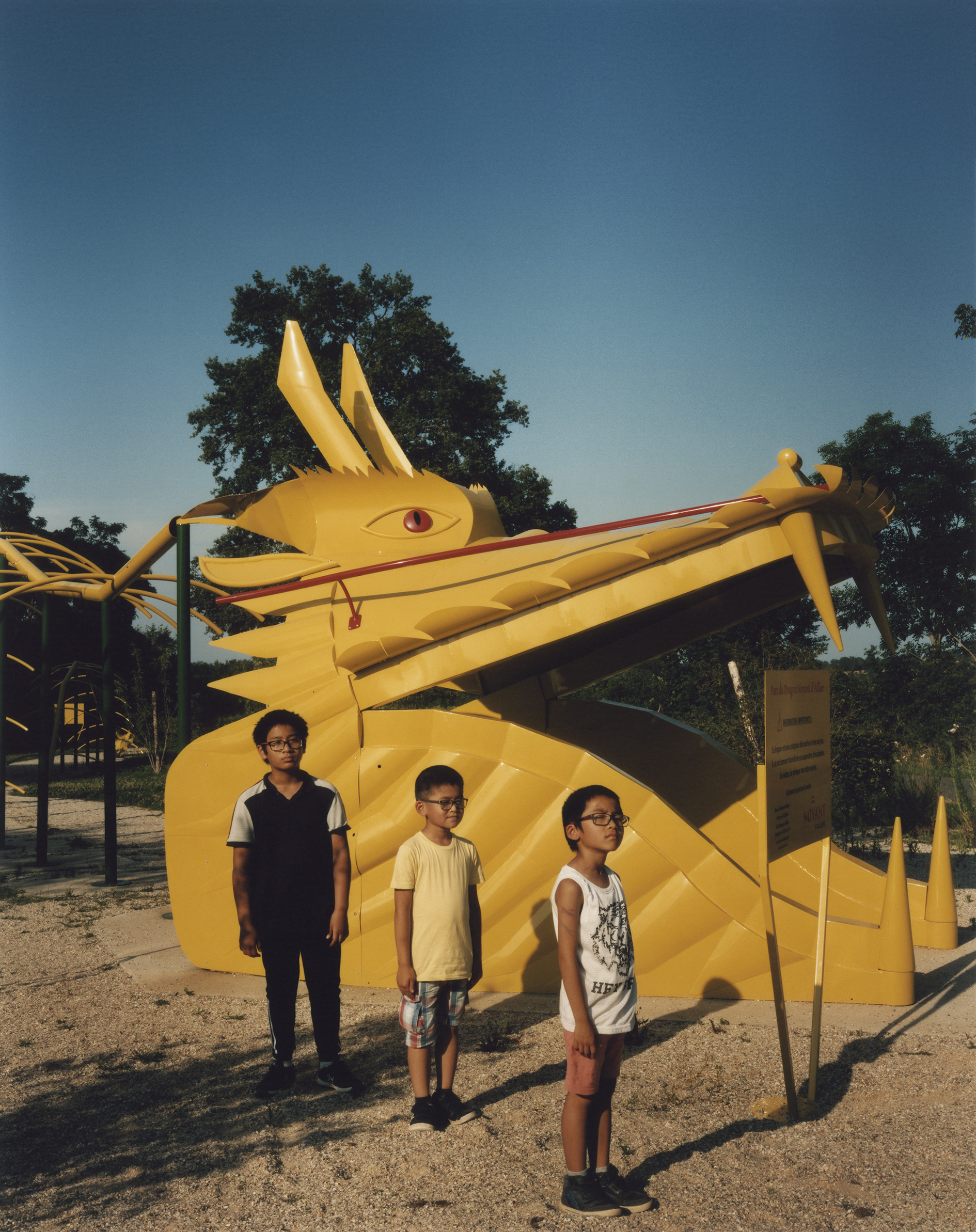
Oscar, Ryan et Luc Nguyen, frères et cousins nés en France de parents vietnamiens, au parc du Dragon, jardin asiatique de Noyant-d'Allier.
Oscar, Ryan, and Luc Nguyen. Brothers and cousins born in France to Vietnamese parents, posing in the Dragon Park, the Asian garden of Noyant-d'Allier.
Diên Biên Phu, Vietnam, 1954. Après deux mois de combats acharnés, les canons se taisent. Le Viêt Minh gagne la guerre et la France perd l'Indochine, la « perle de l'Empire ». Plus de 40 000 rapatriés d'Indochine arrivent en France, pour l'essentiel entre 1954 et 1956. Ce sont surtout des femmes, épouses ou compagnes indochinoises de soldats français, et leurs enfants métis. Ceux qui ont de la famille se dispersent dans le pays ; les plus démunis sont placés par l'administration dans des centres d'accueil « provisoires ». Les plus grands se trouvent à Sainte-Livrade-sur-Lot et à Bias (Lot-et-Garonne), et à Noyant-d'Allier (Allier).
À Sainte-Livrade-sur-Lot, environ 1 200 personnes sont logées dans une ancienne poudrerie militaire, le CAFI (Centre d'accueil des Français d'Indochine). Le confort est rudimentaire : des lits de camp en fer dans des baraquements couverts de tôle ondulée. Un hébergement « provisoire, essentiellement précaire et révocable », dit l'arrêté du 20 mai 1959. Le provisoire durera plus d'un demi-siècle.
À Noyant-d'Allier, quelque 3 000 personnes passent par les anciens corons des mineurs entre 1955 et 1966. La découverte de la métropole est brutale, loin de l'image qu'en donnaient les instituteurs coloniaux. C'est l'hiver, la neige couvre les champs à perte de vue et le thermomètre affiche moins vingt-cinq degrés. Passé le premier choc, il faut s'adapter, trouver sa place, s'intégrer. Les enfants remplissent les écoles voisines ; les adultes travaillent à l'usine ou dans les fermes. Les salaires sont bas et la vie est dure.
En 2014, des logements sociaux ont remplacé les baraquements du CAFI. Sa pagode et quatre bâtiments d'origine ont été conservés comme lieu de mémoire, et certains enfants de rapatriés sont revenus y vivre.
Le 29 octobre 2026, une loi adoptée à l'unanimité par le Parlement a reconnu la responsabilité de la Nation dans l'indignité des conditions d'accueil des rapatriés d'Indochine et créé un dispositif de réparation.
De l'Indochine au bocage a été photographiée à la chambre en 2021 et 2022, avec le soutien du Centre national des arts plastiques (Cnap) à la photographie documentaire contemporaine.
———
Dien Bien Phu, Vietnam, 1954. After two months of fierce fighting, the guns fall silent. The Viet Minh wins the war, and France loses Indochina, the "Pearl of the Empire". More than 40,000 repatriates from Indochina reach France, most of them between 1954 and 1956. Most are women, the Indochinese wives and partners of French soldiers, with their mixed-race children. Those with family ties scatter across the country; the poorest are placed by the administration in "temporary" reception centres. The largest are in Sainte-Livrade-sur-Lot and Bias (Lot-et-Garonne) and in Noyant-d'Allier (Allier).
In Sainte-Livrade-sur-Lot, around 1,200 people are housed in a former military powder factory, the CAFI (Centre d'accueil des Français d'Indochine). Comfort is rudimentary: metal camp beds in barracks with corrugated-iron roofs. A "temporary, essentially precarious and revocable" accommodation, according to the decree of 20 May 1959. The temporary lasted more than half a century.
In Noyant-d'Allier, some 3,000 people pass through the former miners' houses (corons) between 1955 and 1966. Their discovery of mainland France is brutal, far from the image painted by colonial schoolteachers. It is winter, snow covers the fields as far as the eye can see, and the thermometer shows minus twenty-five degrees. After the first shock, they have to adapt, find their place and fit in. The children fill the local schools; the adults work in factories or on farms. Wages are low and life is hard.
In 2014, social housing replaced the CAFI barracks. Its pagoda and four original buildings have been kept as a place of memory, and some of the repatriates' children have come back to live there.
On 29 October 2026, a law adopted unanimously by Parliament recognised the Nation's responsibility for the undignified conditions in which repatriates from Indochina were received, and created a reparation scheme.
De l'Indochine au bocage was photographed with a view camera in 2021 and 2022, with support for contemporary documentary photography from the Centre national des arts plastiques (Cnap).